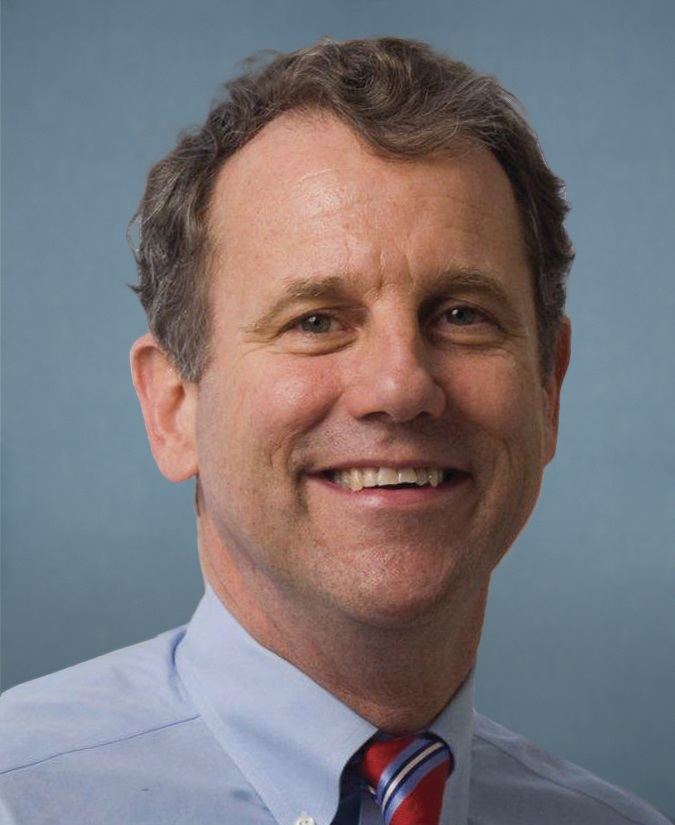
Democrat Sherrod Brown will return to the U.S. Senate after defeating Republican incumbent Sen. Jon Husted in Ohio's Nov. 3 special election. The Associated Press projected Brown's victory at 11:11 p.m., the Ohio Capital Journal reported.
The race appeared on the same Franklin County ballot where Upper Arlington voters weighed in on Issue 7, a $273.5 million school bond, and Issue 34, a city tax levy, according to 10TV and the Columbus Dispatch.
Brown, 73, previously served three Senate terms and represented Ohio from 2007 to 2025. He lost his seat to Republican Bernie Moreno in 2024 by about 3.5 percentage points, according to NBC4. The Nov. 3 special election gave him a path back.
The contest was required after Republican JD Vance resigned his Senate seat to become vice president in January 2025. Gov. Mike DeWine appointed Husted, then Ohio's lieutenant governor, to fill the vacancy. The winner will serve the remaining two years of Vance's term, which expires in January 2029. The seat returns to the ballot in 2028 for a full six-year term.
Analyst points to suburban gains
Lee Hannah, a political scientist at Wright State University, told the Ohio Capital Journal that Brown's margins in suburban counties and cities appeared to drive his win.
"Sherrod Brown is not doing better in rural Ohio," Hannah said. "But in some of these suburban counties and some of the cities, he's up about 5% if those margins hold."
That pattern matters in Upper Arlington and Grandview Heights, which sit in the kind of suburban Franklin County territory where Democrats sought to improve on recent statewide results. Cleveland.com reported that Brown also led in bellwether Wood County and in Delaware County, another suburban area where Democrats were looking for gains.
Cost of living dominated the campaign
Both candidates focused on affordability. Brown accused corporations and wealthy interests of driving up costs for working families. He also made data centers a central issue, criticizing tax incentives that Husted promoted while lieutenant governor.
Husted emphasized job creation and tax reductions, defending Republican tax legislation that eliminated federal income taxes on certain tips and overtime earnings. He introduced the Ratepayer Protection Act, which would have required state utility commissions to consider making data centers pay for their own energy use, according to 10TV. That bill passed the U.S. House but not the Senate.
A record-setting price tag
Advertising spending and reservations surpassed $500 million before the final week, according to political advertising analytics company AdImpact, NBC4 reported. Only two other nonpresidential races have crossed that threshold: Ohio's own 2024 Senate election and this year's Texas Senate race.
The cryptocurrency industry spent about $54 million supporting Husted, Spectrum News 1 reported, topping the $40 million it spent in 2024 to help defeat Brown. Elon Musk funneled more than $7 million to independent groups seeking to help Husted, according to the Ohio Capital Journal.
Brown held a fundraising advantage. His campaign reported $68.4 million in receipts through Oct. 14, compared with $19.9 million for Husted's campaign, NBC4 reported. Republican outside groups spent far more to oppose Brown.
Libertarian Bill Redpath and independent Greg Levy also appeared on the ballot. Nonpartisan forecasters Cook Political Report, Decision Desk HQ and Inside Elections had all rated the contest a toss-up heading into Election Day.