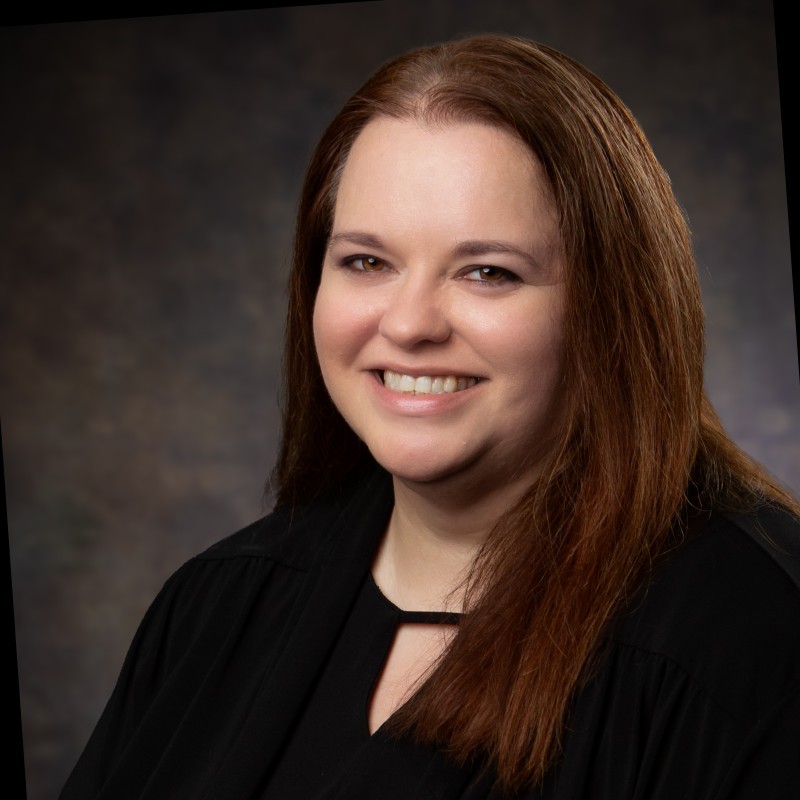
Kelly Green is running for Franklin County Common Pleas Court Judge, Probate Division, in the Nov. 3, 2026 general election. The nonpartisan race also includes Chris Junga.
Green, who has served as a magistrate at Franklin County Probate Court since 2010 and as chief magistrate for the past five years, said in our candidate questionnaire that she is seeking the seat because "I believe my experience, knowledge, and leadership have prepared me to lead the court into its next chapter." She added, "If elected, I would also be honored to become the first woman to serve as Franklin County Probate Judge."
Candidate information
Party affiliation: "Democrat"
Education: "I earned a Bachelor of Arts in Sociology from Ohio University and a Juris Doctor from New England School of Law in Boston, Massachusetts."
Family: "I was born and raised in Ohio in a close-knit family of five children. My father was a steelworker for approximately 30 years, and my mother was a nurse. Their example taught me the value of hard work, responsibility, and service to others."
Family in politics or government: "No."
Experience and public service
Occupation and work history: "I currently serve as Chief Magistrate of the Franklin County Court of Common Pleas, Probate Division, where I have been a magistrate since 2010. As Chief Magistrate, I serve as second in command of the court, supervise magistrates and staff, oversee court and clerk operations, manage a high-volume docket, and help develop and implement court policies and procedures. Before joining Probate Court, I served as a staff attorney for the Franklin County Court of Common Pleas, General Division, from 2002 to 2010, working with several judges."
Previous elected or appointed office: "I have served as a magistrate of the Franklin County Court of Common Pleas, Probate Division, since 2010 and currently serve as Chief Magistrate. Magistrates are appointed judicial officers. I have not previously held elected public office."
Endorsements: The AFL-CIO Central Ohio Labor Council, the Franklin County Democratic Party and the Hilliard Democrats have endorsed Green, according to Blue Voter Guide.
On the issues
Critical differences: Asked what are the critical differences between herself and other candidates, Green said in our questionnaire, "I bring 16 years of direct judicial experience in the Franklin County Probate Court, including five years as Chief Magistrate. I have presided over virtually every type of case that comes before the court, including estates, guardianships, adoptions, trusts, mental health commitments, and complex contested matters."
Key accomplishments: Green cited her work modernizing the court and expanding access. "I helped lead the implementation of electronic filing for all Probate Court case types and established partnerships with Legal Aid and the Columbus Metropolitan Library to help people navigate the probate process without an attorney," she said in our questionnaire.
Guardianship oversight: Asked how she would ensure guardians are properly screened, Green said, "Before appointing a guardian, the court requires an expert evaluation from a qualified medical professional and must consider whether a less restrictive alternative can meet the person's needs." She added, "When evidence demonstrates that an individual can safely exercise their rights, with appropriate supports or less restrictive alternatives where needed, the court should restore those rights."
Court accessibility: Green said she would build on existing efforts. "I helped establish a Small Estates Resource Center and develop a guardianship legal clinic to assist people without attorneys, as well as the Good Deeds Program with the Clerk of Courts and County Recorder to provide community education about estate planning and avoiding unnecessary probate," she said in our questionnaire.
What she would change as judge: Green said she would make "accessibility, education, and community engagement central to the court's long-term direction." She added, "I also want us to continue looking at our processes from the perspective of the people who use them and asking how we can make their interactions with the court easier to understand and navigate."