Upper Arlington voters weighing a $273.5 million school levy this fall face a funding squeeze that goes deeper than rising costs, a statewide analysis argues.
The Ohio Capital Journal report, published Tuesday, Sept. 15, by writer Gene Sasso, contends that Tax Increment Financing (TIF) deals and property tax abatements divert new growth away from schools. A TIF freezes a property's taxable value at its pre-development level for up to 30 years, sending new revenue to the development rather than to classrooms.
Abatements exempt companies from property taxes on improvements for a decade or more. Sasso argued that families, not the corporations receiving abatements, end up "voting yes on the next operating levy because the last one already expired."
The analysis does not name Upper Arlington or Grandview Heights. But the dynamic it describes hits suburban districts hard because of House Bill 920, the state law that prevents voted operating levies from growing as property values rise.
Why UA keeps going back to voters
Upper Arlington Schools Treasurer and CFO Andrew Geistfeld told the board at its Tuesday, Sept. 8, meeting that the district's updated financial forecast shows expenditures outpacing revenue. More than 94% of the district's revenue is fixed under House Bill 920, according to district meeting records. That gap is growing.
The district last passed an operating levy in fall 2022 and stretched it an extra year beyond the typical three-year cycle. "There is no zero-cost option," Geistfeld said in the district's Aug. 20 announcement of Issue 7. "The district will need to make significant investments in the needs of Hastings, Jones and Burbank in the immediate future."
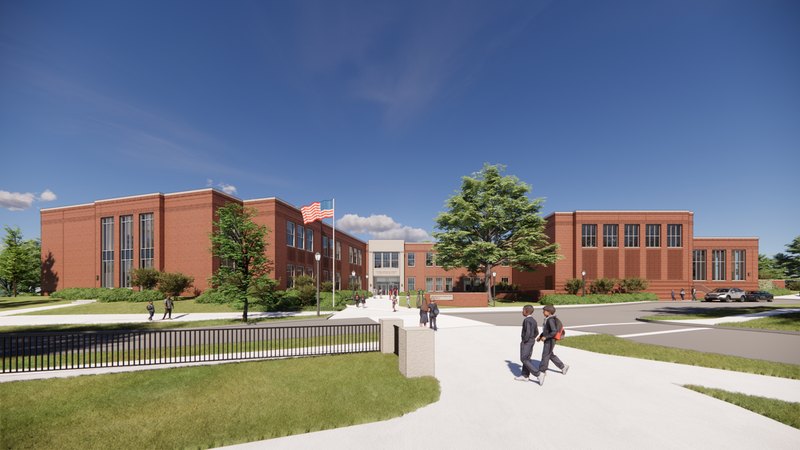
Issue 7, on the Nov. 3 ballot, combines a 4.9-mill operating levy with a $273.5 million bond issue. The bond would fund rebuilding Hastings Middle School, renovating Jones Middle School and rebuilding Burbank Early Childhood School. For a home appraised at $500,000, the combined cost is estimated at about $1,250 a year.
Grandview Heights: a different TIF story
Grandview Heights Schools offer a contrasting example. The district's financial forecast credits Grandview Yard TIF revenue with helping the schools keep pace with rising costs.
Board minutes from Nov. 12, 2025, show the district earmarked $1,058,906 in Grandview Yard TIF funds toward 2026 debt service on its 2018 bond levy. That levy carried a ballot millage of 7.51 mills, but TIF earmarking cut the actual increase to taxpayers to 2.8 mills.
Still, the Grandview Heights forecast warns that expenditures are projected to grow faster than revenues. The district receives only about 11% of its annual revenue from the state.
How TIF approvals work
Ohio law requires school board approval of a TIF or abatement only when the exemption exceeds 10 years or 75% of the improvement's value, according to the Ohio Capital Journal analysis. Below that line, no board vote is required.
The Franklin County Auditor's office administers TIF and abatement programs across the county. About 40,000 parcels in Franklin County receive some form of tax incentive. District-level data on foregone revenue is available through the auditor's online Tax Incentive Hub.
Upper Arlington Schools is hosting a Coffee & Conversation on school funding Friday, Sept. 18, from 9 to 10 a.m. at the Bob Crane Community Center, 3200 Tremont Road. Guided building tours of Hastings, Jones and Burbank are scheduled for Sept. 23 and Oct. 8 at 6 and 7 p.m., and a Lunch & Learn Webinar is set for noon Oct. 2.